By Henry Payne
Published: October 12, 2026 | updated: October 15, 2026
Henry is the Head of Crossfire, Sandfield’s integration specialist unit, with 20+ years of experience in data and system integrations.
Insights + Blogs

By Henry Payne
Published: October 12, 2026 | updated: October 15, 2026
Henry is the Head of Crossfire, Sandfield’s integration specialist unit, with 20+ years of experience in data and system integrations.
Show an integration team an AI that maps a complex EDI file in minutes and it's reasonable for them to wonder where that leaves them. For years their value has rested on something few other people in the business can do, which is read the formats and the code that move orders, shipments and invoices between systems.
I think that worry is understandable and mostly misplaced. The job isn't going away, but the part of it that matters most is moving, and the people who see that early will be the ones the business can least do without.
Ask most integration specialists what they spend their week on and you'll hear a lot about formats. They read X12 and EDIFACT, IDocs and custom CSVs, work out which segment carries the delivery date, and write or patch the code that turns one partner's version of an order into another's. It's skilled work, and it has made them the gatekeepers of anything that crosses a system boundary.
Good specialists have always worked closely with customers and trading partners as well. The trouble is how much of the week the technical build takes: writing and testing mapping code for each customer's version of a booking, tracking event or invoice, then fixing it when a partner changes something on their side. Every new partner adds more code to look after, which leaves less time for the conversations about what each partner actually needs.
AI doesn't remove the need to understand integration. What it removes is the need to read every format by hand. In Crossfire, the AI builds a mapping from sample input and output files, runs the tests, and keeps working until they pass or it hits a question it can't answer on its own. Those questions are almost always about the business: should a booking with no delivery window be held or sent to dispatch with a default, does this customer want every tracking event or only pickup and delivery, and what happens when a consignment comes through with a postcode outside your zones.
That's where more of the specialist's time can go. Take a transport company that receives bookings from forty customers. One sends a CSV by email, another sends EDIFACT, a third books through an API, and each wants tracking updates and proof of delivery back in its own format. The technical job used to be building and maintaining forty sets of mapping code. Now the job is closer to a business analyst's: understanding what each customer expects, designing the flow that meets it, and managing those requirements as they change, while the AI handles the translation underneath. You still check what the AI produced, test it against real messages and decide when it's ready to go live.
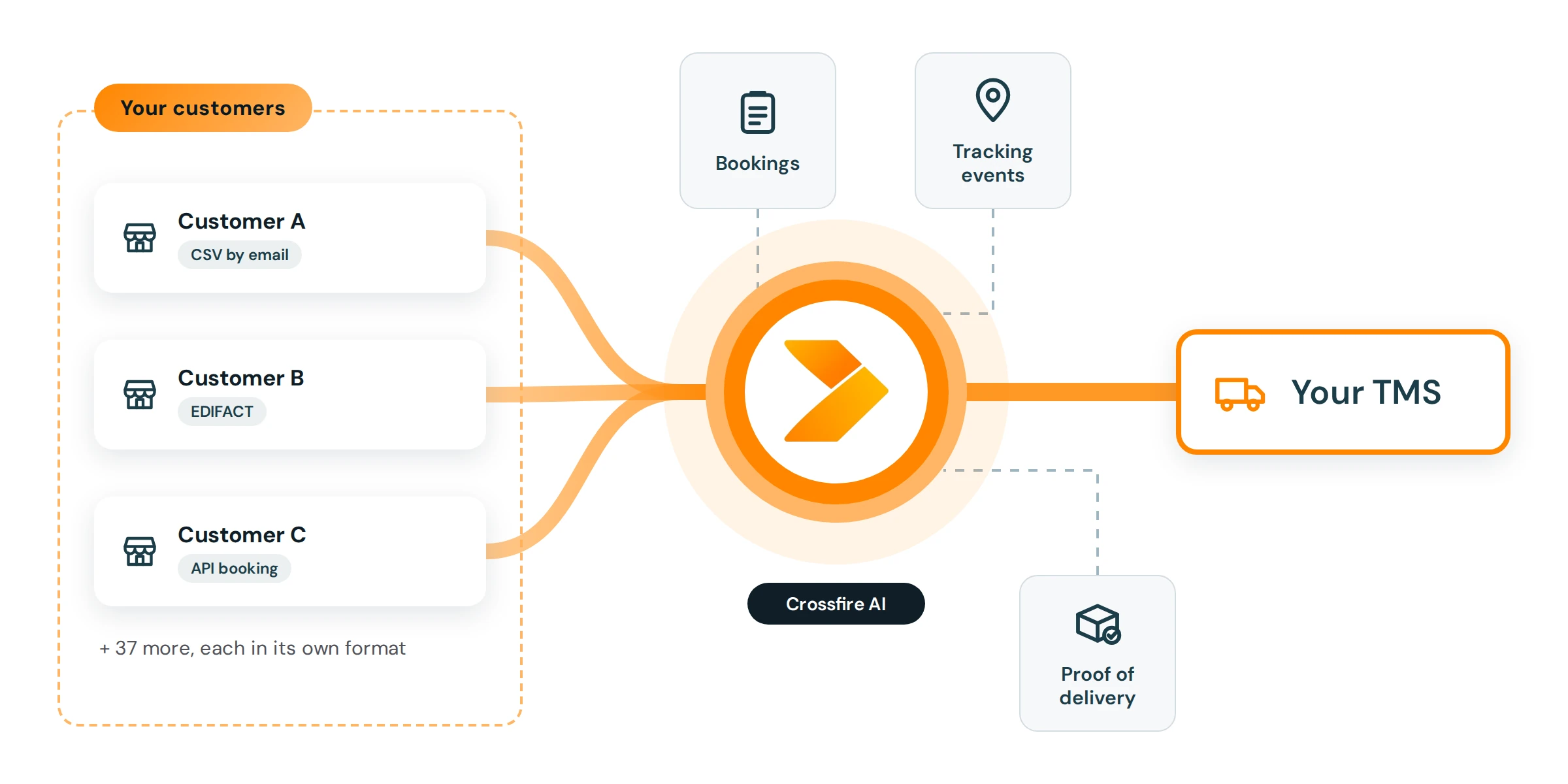
It also means you're no longer limited to the formats you happen to know. A specialist who has spent ten years on EDIFACT can pick up an X12 or IDoc integration, ask Crossfire AI to explain how it works in plain English, and get on with the part that needs their judgement. The format stops being the thing standing between them and the problem.
The same shift is happening across software development. AI coding tools now write a lot of the routine code that developers used to type out, and the developers getting the most from them spend more of their time on the work around the code: understanding the problem properly, writing a clear brief, reviewing what the tool produced and testing it before it ships.
There's a real debate about what this means for junior roles, and it isn't settled. For experienced developers, though, the skill that stands out has moved from typing the code to knowing what the code should do and whether it does it. Integration is the same kind of work, with the added complication that every rule belongs to someone else's business.
If you lead an integration team, the people you already have are well placed for this. They know your customers' quirks, they know which rules break and why, and they know the questions to ask, which is exactly what an AI-built integration needs from a person. What they'll need from you is permission to spend less time in the code and more time with customers, and probably some support in getting comfortable with that. Our team has always been customer and requirements focused first, and then translate that into the data mapping required. The big change for us is that we are spending less time on data mapping.
The skills that will matter most are the ones that used to be a side part of the job: asking good questions, writing down rules clearly, spotting the exception before it becomes a support call, and explaining to a customer why their integration behaves the way it does. Specialists who build those skills will spend their week on work the business notices, rather than on translation work nobody sees until it fails.
At Crossfire, we’re helping integration specialists shift their focus from writing manual translation code to solving real business problems. Crossfire AI takes care of the routine mapping, automated testing, and complex format translations under the hood, giving your team the time and confidence to deliver faster, more impactful business outcomes. Book a demo with our team.



© Copyright 2026 Sandfield Associates Limited. All Rights Reserved. Terms of Use | Privacy Policy